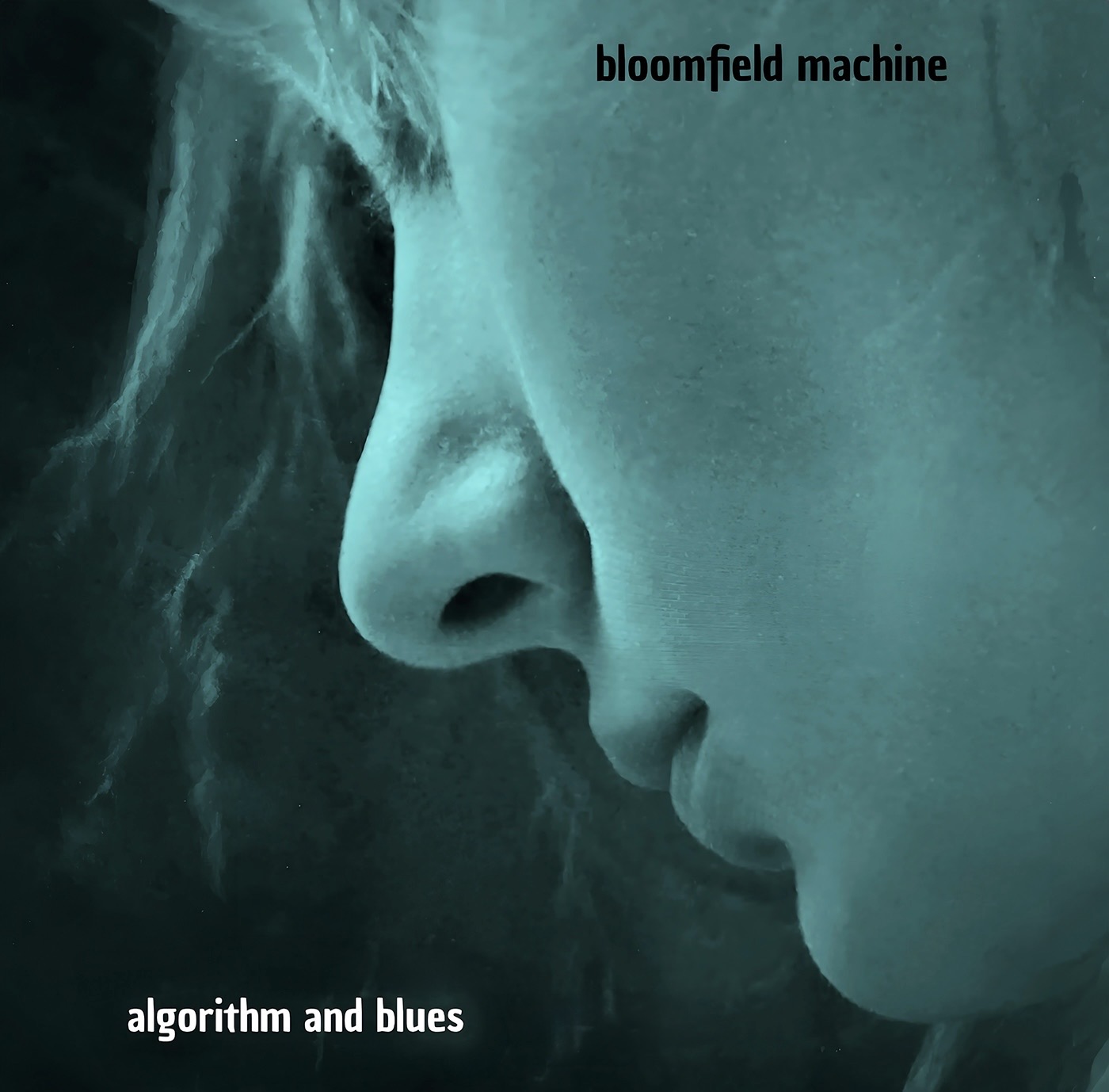
“algorithm & blues” feels like a collection of fleeting thoughts captured before they disappear. Across fifteen tracks and a little over thirty minutes, Bloomfield Machine creates a constantly shifting environment where melody, distortion, electronic textures, guitar, and unexpected sonic details coexist. The songs are concise, but their short formats work in their favour, allowing each piece to establish an idea quickly before moving somewhere new. Rather than following a predictable album formula, the record maintains a sense of curiosity from beginning to end.
Brian Kassan’s expanded use of guitar gives the project a fresh dimension, introducing a noticeable rock presence alongside his established affinity for keyboards and electronic experimentation. The contrast between familiar melodic structures and rougher, more fragmented textures keeps the listening experience unpredictable. A beautiful passage can suddenly encounter distortion or digital interference, while a simple motif may reveal additional layers after several plays. Those contrasts give “algorithm & blues” its character and prevent the album from settling comfortably into a single genre.
The title itself becomes an intriguing lens through which to hear the record. Technology and human feeling appear to occupy the same space, with programmed textures and organic musical ideas constantly crossing paths. Yet the album never feels like a cold exercise in experimentation. Kassan’s personal circumstances and his reliance on music as a form of self-expression give the recordings a human presence that remains perceptible beneath the electronic surfaces. The result is a record that can feel playful in one moment and reflective in another, without forcing either mood.

Perhaps the most appealing aspect of Bloomfield Machine is the freedom behind the creative process. Kassan records, performs, produces, and mixes the material himself, treating his home studio as both refuge and experimental space. “algorithm & blues” reflects that independence through its willingness to follow instinct rather than convention. The album may reveal more with each encounter, particularly through headphones, where its smaller details have room to emerge. For listeners willing to explore beyond familiar genre boundaries, this ninth chapter offers an intriguing snapshot of an artist still discovering where his own creativity can lead.