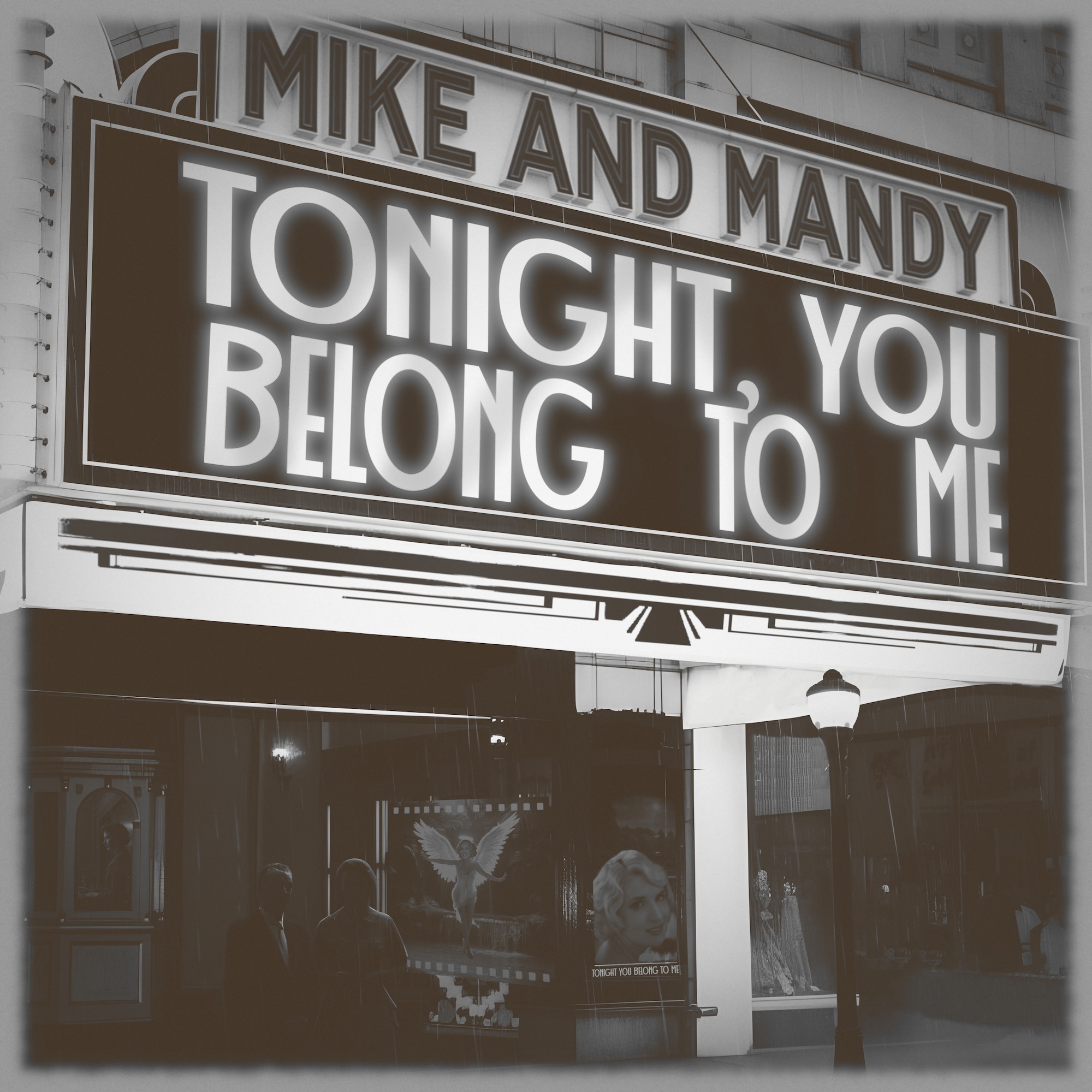
With Tonight You Belong To Me, Los Angeles indie duo Mike and Mandy reach back a full century — and somehow make the past feel weightless, suspended in a haze of sub-bass and echo. Released to coincide with National Retro Day, the track is less a throwback and more a time experiment: what happens when a 1920s standard is lowered into the humid, nocturnal atmosphere of trip-hop and dub?

The answer is something quietly hypnotic. Already known for reshaping familiar material — from their trip-hop take on The Cure’s “Lovesong” to a dub-soaked reimagining of “Quizás, Quizás, Quizás” — Mike and Mandy approach this century-old tune with the same curatorial instinct. They don’t cover songs; they relocate them. Here, the melody remains tender and recognisable, but the emotional framing shifts dramatically. The original composition has survived 100 years because of its harmonic duality — written in both major and minor tonalities, it carries an ache beneath its sweetness. Mike and Mandy lean into that tension. They slow the tempo into dub territory, letting negative space do as much storytelling as the lyrics. Slide guitar lines drift like smoke across a skeletal rhythm section. Sub-bass pulses gently under dry, deliberate drums. Reverb isn’t decoration — it’s architecture. Where mid-century interpretations polished the song into bright-eyed pop innocence, this version restores its romantic uncertainty. There’s longing here, but also restraint. It feels intimate without being sentimental. The duo understand that mood can be more powerful than momentum.
Mandy’s performance experience — including her appearance in The Nowhere Inn — brings a cinematic awareness to the delivery. Meanwhile, Mike’s cultural cameo as the air-drumming businessman in a Volkswagen commercial hints at the pair’s playful self-awareness. Yet there’s nothing ironic about this recording. Notably, the duo emphasise that absolutely no AI was used in crafting the track — a deliberate, human touch in an era of digital shortcuts. What makes Tonight You Belong To Me compelling isn’t simply that it modernises an old song. It occupies the liminal space between eras. 1920s yearning meets 2020s ambience. Heartbreak hovers just above hope. The track doesn’t resolve so much as it lingers — and that lingering is its strength. For curators who build late-night playlists where genre dissolves into feeling, this version will feel at home. It doesn’t demand attention; it earns it slowly. A century on, Tonight You Belong To Me proves that some melodies don’t age — they just wait for the right atmosphere to bloom again.