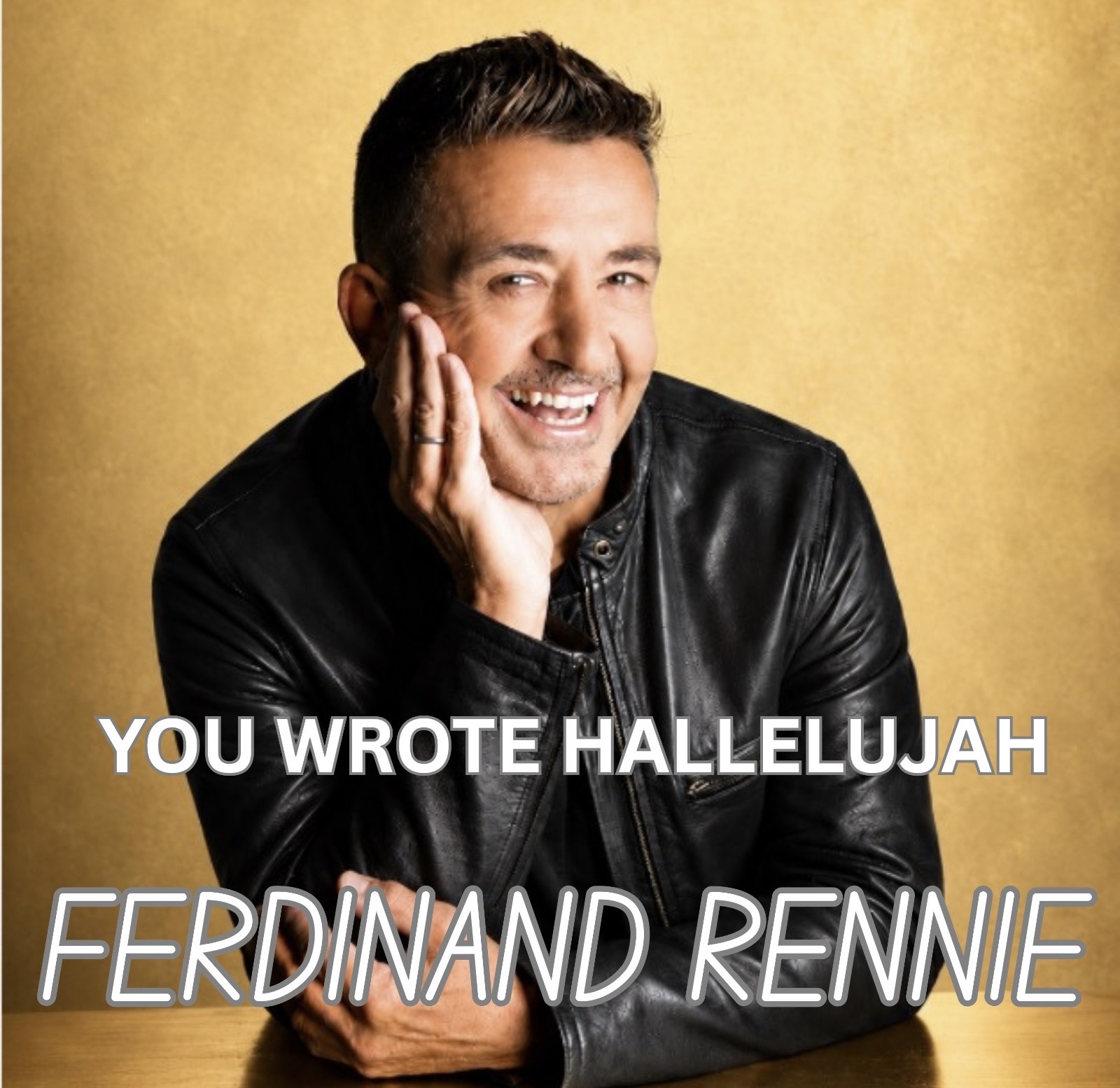
Ferdinand Rennie’s interpretation of You Wrote Hallelujah approaches the subject of songwriting with a journal-like curiosity, examining how emotional memory and ethical reflection intersect within well-known compositions. The recording positions familiar references in a broader conversation about creative responsibility and personal truth. It also situates Rennie’s delivery within a wider discourse on reinterpretation, where familiar works are revisited through contemporary sensitivity and historical awareness, without altering their foundational identity in subtle form.
The song draws conceptual parallels between Leonard Cohen’s exploration of doubt in Hallelujah and John Newton’s transformation behind Amazing Grace, presenting them as contrasting yet connected accounts of belief, regret, and renewal. These historical threads are used to highlight how enduring works often emerge from complex life experiences. This framing encourages reflection on how moral transformation narratives continue to shape modern listening perspectives and how audiences connect past struggles with present interpretation across cultural and temporal lines continuously.

Rennie’s extensive career across stage productions, television appearances, and international broadcasts informs the interpretive depth he brings to this recording. His history of performing in major theatrical works and global events contributes to a measured and attentive approach when engaging with material rooted in reflection. This perspective is further enriched by his exposure to diverse performance environments, allowing him to approach material with disciplined restraint and emotional precision shaped over decades of practice and reflection.
Produced in collaboration with Alan Vukelic and co-written with Michael Andrew Storm and Meg McAndrew, the track maintains a restrained structure that allows its message to unfold gradually. It leaves a reflective impression on the listener, encouraging continued thought about artistic intent and inherited tradition in songwriting. Its production approach favors clarity and narrative continuity, ensuring that the listener remains engaged with the underlying themes rather than external embellishment or excessive layering through deliberate pacing.
FABSCOTS.COM INSTAGRAM FACEBOOK SPOTIFY YOUTUBE TIKTOK