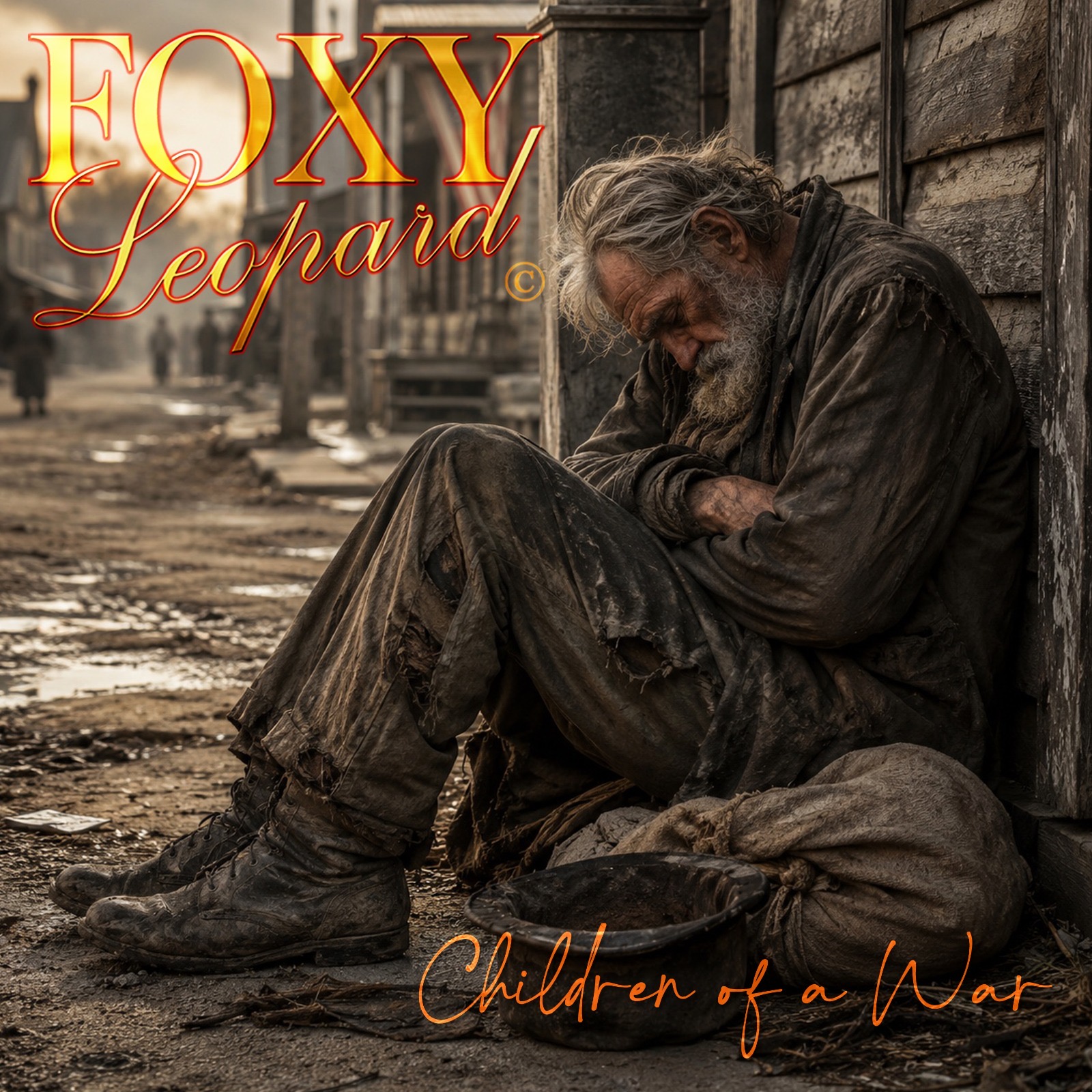
The song titled “Children of the War” presents the world that Foxy Leopard will explore in their forthcoming album, After, by telling a story which focuses less on the battlefield than on the people left behind. It raises the question of who can be regarded as a “child of a war”, slowly broadening this concept beyond age to include anyone whose life has been affected by a conflict which they neither started nor had the power to control. The narrative alternates between an old man whose specific personal difficulties are not identified, a woman who is bringing up children after losing her partner, and a group of children giving simple comments on the way people are different.
The song’s simple arrangement allows the stories to unfold. It features a rough, raspy male voice accompanied by sparse single-note passages on a steel-body resonator guitar, some restrained percussion, harmonica touches, and a small children’s choir. Instead of approaching the subject with a grand cinematic style, Foxy Leopard intentionally keeps the recording basic, leaving flaws such as loose timing, breaths, string noise, and the metallic resonance as part of its character. There is a special directness about the song because of the contrast between the adults’ complicated experiences and the children’s straightforward words.
The making of “Children of the War” was a lengthy one, involving more than 40,000 words of exchange and over 1,250 generations, edits, extensions, remixes, and other variations. Various sections were rewritten several times, shortened, moved or reconstructed, and the arrangements as well as the relationship between the lead singer and the children were constantly reexamined. Artificial intelligence was included in this production process together with repeated writing, listening, directing, comparison, and revision. Finally, when the recording had been developed so extensively, it took the contrary course and became smaller and more restrained rather than becoming more elaborate.
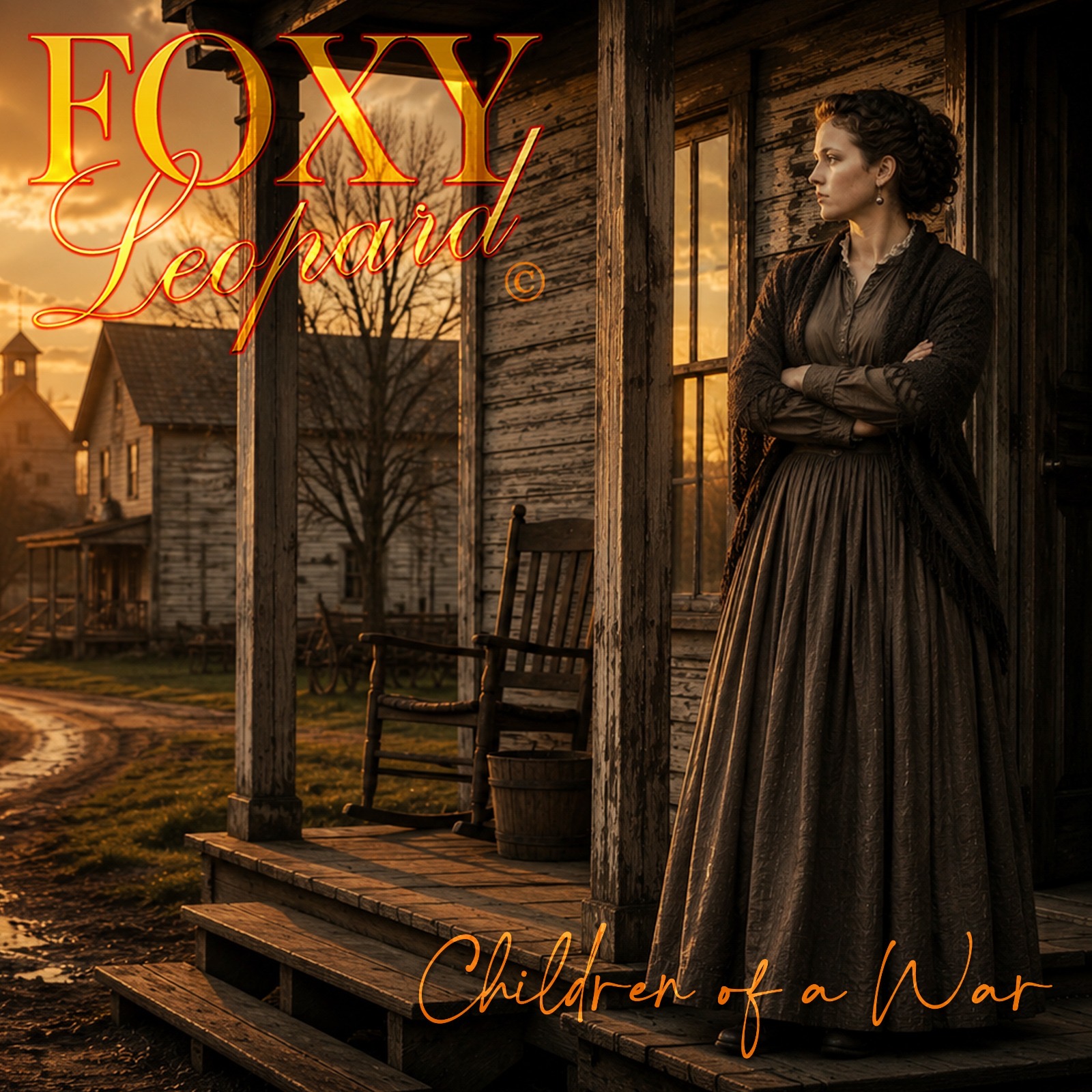
The song “Children of the War”, as a highlight from the album After, sets out a key viewpoint concerning the album: the state of things that remain after the fighting has ended but whose effects are still felt in everyday life. The final return to the old man reinforces this idea, transforming the previous question of whether someone can be helped into a hopeful answer given by the children. Rather than ending with a dramatic victory scene, Foxy Leopard leaves the listener with a focus on compassion and the choice not to walk past another person’s difficulties. The song thus provides a thoughtfully built introduction to an album centred on the aftermath of conflict and the people who come to inherit it.