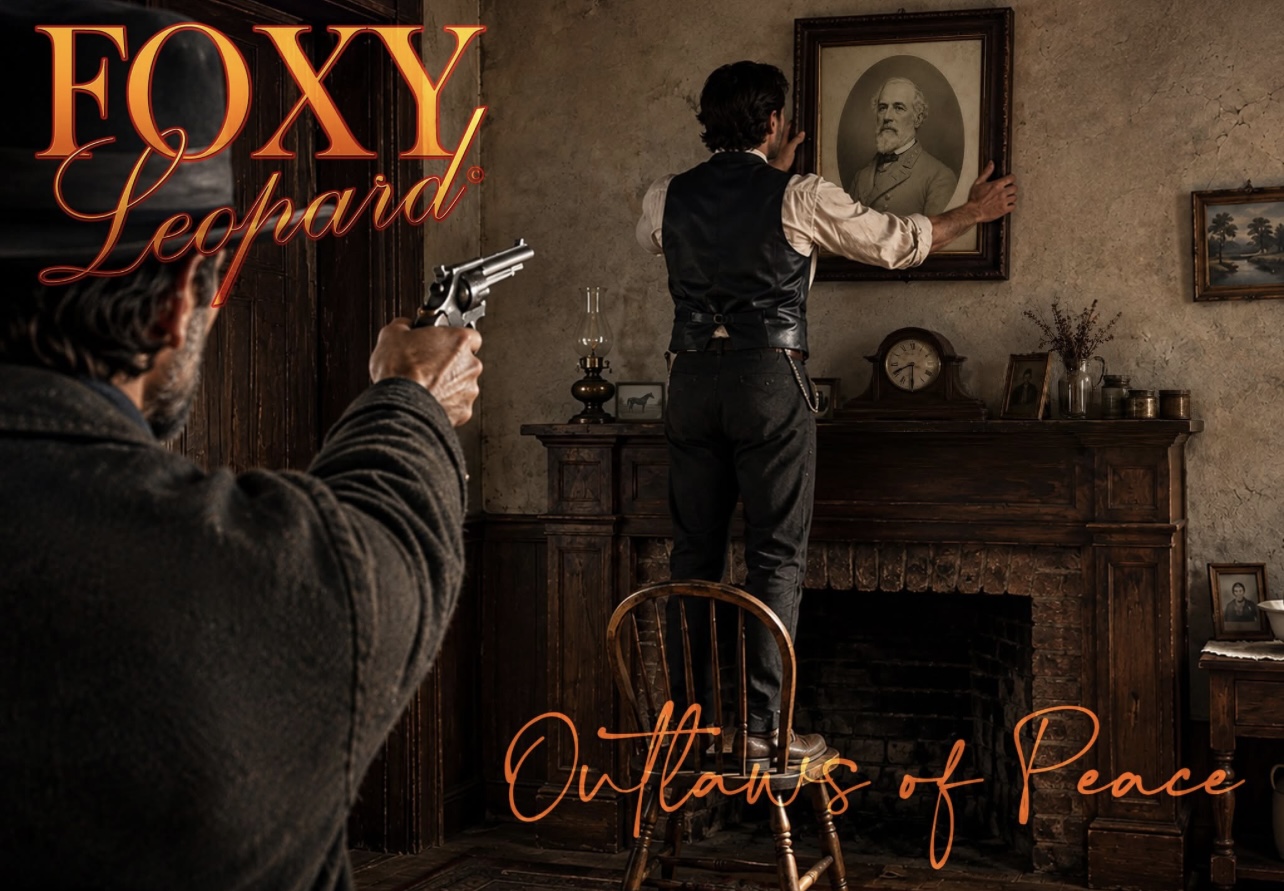
Peace doesn’t necessarily mean that violence comes to an end, and Foxy Leopard looks at this contradiction in the song “Outlaws of Peace”. The song is set in the period following the American Civil War and looks at the situation when former combatants go back to a society that has been changed by the conflict. Instead of focusing on battles or military victories, the song deals with the lives of those left behind and poses questions regarding the difficulties of putting wartime experiences behind one.
This examination centres on Jesse and Frank James who, having been guerrillas during the Confederate cause, came to be linked with violence in the years that followed the war; thus their experiences are pertinent to a song that is concerned with the difficult process of moving from a state of conflict to one of civilian life. The criminal reputations they acquired are not regarded as something to be admired. On the contrary, the piece looks at the disturbing idea that the habits and consequences of war can continue to exist long after the initial conflict has ceased.
A further connection appears when the situation surrounding Abraham Lincoln’s assassination in 1865 is compared with that of Jesse James’s death in 1882. In both cases, the men were shot from behind, even though their situations and the legacies they left behind were different. This association ties their deaths to the general atmosphere of the Civil War, highlighting the song’s concern with betrayal and the continuing presence of violence. The use of historical references gives the topic a more extensive outlook, moving beyond individual lives to consider the effects of a divided nation.
The raw resonator guitar offers a suitable background for this bleak theme, the metallic strikes, the eerie slides and the strong acoustic resonance giving it an  aggressive character which shuns the familiarity of traditional country music arrangements. This kind of sound matches a narrative in which peace does not ensure a settlement of issues. “Outlaws of Peace” finally poses a tough question: when fighting has ceased, can people who have been shaped by war actually get rid of the violence associated with it?